When Is a Deep Dental Cleaning Needed?
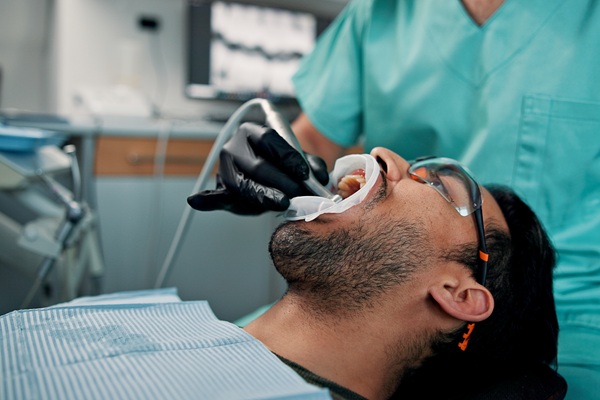
A deep dental cleaning is a great way to improve your periodontal health, particularly for patients who have periodontitis (an advanced form of gum disease). The following is a review of when a deep dental cleaning (also called a scaling and root planing) might be recommended.
Signs that indicate deep dental cleaning is necessary
The most notable signs that indicate a need for deep dental cleaning include gum pockets that are greater than 4 millimeters, bone loss in the jaw and other symptoms of periodontitis that do not improve over time. Deep dental cleaning cannot cure periodontitis, but it can treat the symptoms and pave the way to recovery in the long term.
Gum pockets greater than 4 millimeters
Gum pockets develop when gum tissue starts to separate from teeth. If left untreated, this worsens over time and can eventually lead to tooth loss. Gum pockets allow bacteria and food particles to become trapped, increasing the chance of even larger pockets. Minor gum pockets may not be a major cause for concern, but when they become greater than 4 millimeters, they often require a deep dental cleaning. This aims to clean the gum line around the pocket and allow the gums to reattach to the root of each tooth.
Bone loss caused by periodontal disease
Bone loss is another major indicator of a more serious case of periodontitis. When bone loss occurs, it increases the chance of tooth loss. In this instance, a routine cleaning does not address the concern, and a deep dental cleaning is necessary to clean below the gum line, closer to where the bone loss has taken place, near the root of the tooth. A dentist can determine if bone loss is an issue through dental X-rays and an oral examination.
Periodontitis that does not improve over time
Some dentists may recommend a deep dental cleaning if gum disease continues for an extended period of time without any improvement, even if there are no severe signs of periodontitis, such as bone loss or deep gum pockets. In some instances, a deep dental cleaning in the early stages of gum disease can ensure that more serious signs do not develop. In general, when a routine cleaning is not enough to address gum disease, a deep dental cleaning may be the better solution.
Preventing dental disease with regular cleaning
Dentists prefer not to perform a deep dental cleaning when it is not necessary, as it suggests that the issue of gum disease is more severe. Instead, they recommend regular dental cleanings to prevent gum disease or treat gum disease in the earliest stage possible. Ideally, patients should have their teeth cleaned every four to six months, along with good oral hygiene at home.
Schedule a periodontal consultation today
If you are concerned with the current status of your periodontal health or simply want a check-up visit and routine cleaning, then give us a call or send us a message today. Our friendly dental team can answer additional questions you have and help you on your path to better periodontal health.
Request an appointment here: https://parmeroaksdental.com or call Parmer Oaks Dental Care at (512) 354-4450 for an appointment in our Cedar Park office.
Check out what others are saying about our dental services on Yelp: Root Scaling and Planing in Cedar Park, TX.
Related Posts
Gum disease is a common yet often overlooked condition that affects millions of adults worldwide. It begins subtly, often without noticeable pain, making it a silent threat to both oral and overall health. Left untreated, gum disease can progress from mild inflammation to a severe infection, potentially leading to tooth loss and contributing to other…
A general dentist will typically only recommend pulling a tooth when absolutely necessary. This procedure, also known as tooth extraction, is reserved for teeth that have been decayed or damaged beyond repair. Not only does this prevent a problem tooth from starting a domino effect of oral health issues, but it also brings several other…
Seeing your dentist for professional dental cleaning during your regular visits can help prevent gum disease. Studies show that this condition develops at a slow pace. It occurs when food particles and bacteria get into the gum pockets. Here are details on how a routine dental cleaning can prevent gum disease.Plaque forms every day on…
Dental cleanings are a critical element in any overarching oral health maintenance plan. Knowing what happens during a dental cleaning can help relieve some anxiety beforehand, so you do not have to worry about the unknown.Outlined below is a step-by-step guide to getting a dental cleaning. Reviewing this information ahead of time can help relieve…